Every game has a rhythm—an opening move, a rising clash, and a decisive finale. The best players don’t just react to this flow; they anticipate it. Yet most competitors rely on one static plan from start to finish, hitting frustrating plateaus and losing matches they seemed poised to win. The difference isn’t mechanics alone—it’s understanding early vs late game strategy and knowing when to shift gears. In this guide, you’ll learn a clear, phase-based framework for adapting your decisions across early, mid, and late game scenarios—whether in RTS, MOBAs, or Battle Royales—so you can control momentum and close out victories consistently.
The Opening Gambit: Securing Your Early Game Foundation
As players navigate the strategic trade-offs between early and late game tactics, understanding how these choices impact skill development can be further enhanced by exploring the rise of cross-platform gaming and its implications for diverse gameplay experiences – for more details, check out our The Rise of Cross-Platform Gaming and What It Means for Skill Development.
The early game isn’t about flashy plays or highlight reels. It’s about survival. Your core objective is simple: don’t lose before you can win. That means prioritizing resource accumulation and information gathering over ego-driven skirmishes (yes, even if chat is daring you to dive).
Resource Management Comes First
Every decision in the opening minutes is a trade-off between:
- Economy (farming creeps, harvesting minerals, building generators)
- Technology (unlocking key skills, tiers, or units)
- Pressure (early harassment or rush strategies)
Take a classic RTS scenario: a Zerg player choosing to “drone up” invests in workers for long-term income. The alternative? An early rush that can cripple an unprepared opponent. The feature here is choice architecture—games are designed to force tension between growth and aggression. The benefit? Players who understand this tension build scalable advantages instead of coin-flip leads.
This is where early vs late game strategy begins to diverge. Early investments compound. A missed wave or idle worker isn’t just a small mistake—it’s delayed momentum.
The Power of Vision
Information is the highest-value early resource. Wards, scouts, minimap checks—these tools exist to prevent catastrophic surprises. Knowing an enemy’s build path lets you counter before the attack lands. (Think of it as reading the script before the plot twist.)
Calculated Aggression
Pressure isn’t random; it’s transactional. Trading health to deny farm. Sacrificing tempo to secure objective control. Small losses can yield larger gains if timed correctly.
Pro tip: If you can’t explain what you gain from a fight, don’t take it.
The Mid-Game Transition: Forcing Objectives and Hitting Power Spikes
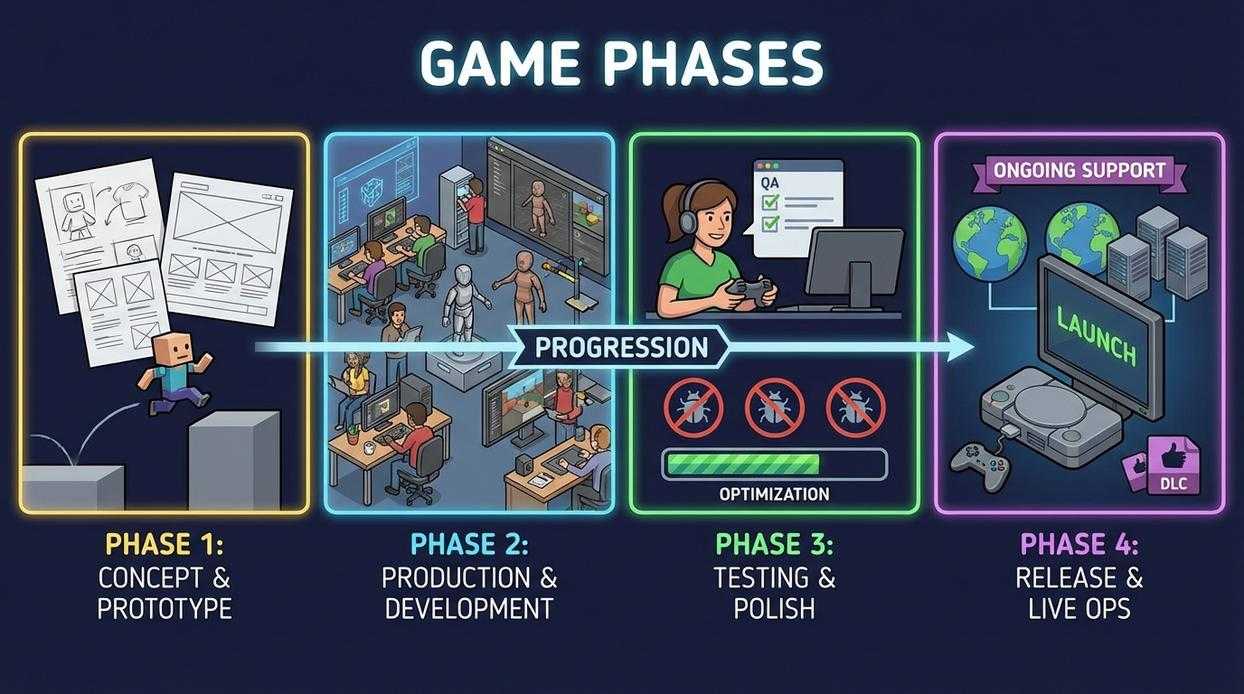
The mid-game is the strategic pivot. It begins when players leave their starting lanes or roles and start contesting shared objectives. In other words, the focus shifts from individual gold or XP leads to coordinated, team-wide impact. Farming still matters, of course, but now every move asks a bigger question: does this help us win the map?
First, let’s define a power spike. A power spike is a temporary window of peak strength—often triggered by completing a core item, unlocking an ultimate ability, or hitting a key level threshold. For example, a League of Legends champion finishing Mythic item number one can suddenly win fights they would have lost two minutes earlier. Similarly, in Overwatch, a team holding multiple ultimates has a spike in fight-winning potential. The tricky part? Not every spike is obvious, and sometimes even pros misjudge them (yes, really).
Because of that, forcing fights during a spike is powerful—but risky. Some argue patience is safer: scale, avoid coin-flip engagements, and wait for late-game insurance. That’s valid. However, giving up the map during your strongest window can erase your advantage. Timing aggression around spikes often separates coordinated teams from solo queue chaos.
Objective-based play defines this phase. Securing Dragon, capturing a control point, or controlling the circle in a Battle Royale grants global advantages that snowball. These aren’t just flashy plays; they’re compounding assets (think interest, but with fireballs).
Then there’s rotating—moving as a unit to create number advantages. A clean rotation forces the enemy to respond, usually conceding farm, vision, or towers elsewhere. Still, I’ll admit: perfect rotations depend heavily on communication, which is why analyzing team communication systems in high level play is essential to understanding consistent mid-game success.
Ultimately, mastering the mid-game reframes early vs late game strategy into one decisive question: when is your moment to pull the trigger?
The Endgame Checkmate: Executing Flawlessly Under Pressure
The late game is where nerves crack and legends are made. Death timers stretch past a minute, and one lost team fight can erase 40 minutes of careful setup. This is the High-Stakes Finale: patience isn’t passive—it’s controlled aggression. Think of it like tournament poker: you’re not playing more hands, you’re playing the right ones.
Many players obsess over mechanics, but endgame success is the balance of macro vs. micro execution. Macro refers to big-picture decisions—lane pressure, vision control, objective timing. Split-pushing (applying pressure in a side lane to force enemies to respond) is classic macro. Micro is your mechanical precision in fights—skill timing, positioning, cooldown tracking. In early vs late game strategy, macro widens advantages; in the final fight, micro cashes them in.
Target prioritization decides championships. In chaotic fights, ask: who wins them the game if left alive? Usually:
- The primary damage dealer (consistent threat output)
- The healer or enchanter (sustain engine)
- The fed assassin (backline disruptor)
Locking onto the wrong target is like focusing stormtroopers while Darth Vader is still on the field (bold choice, rarely wise). Pro tip: track enemy defensive cooldowns before committing—burning everything into a shield or invulnerability wastes your win condition.
Closing out requires discipline. Teams throw leads by overchasing instead of securing objectives. Press advantages through vision, waves, and objective setups—not ego duels. Conversely, if you’re behind, wait for overconfidence. One greedy push without vision is your comeback window. Precision beats panic every time.
Becoming a Three-Phase Threat
Mastering a match isn’t about clinging to one perfect tactic. It’s about executing three distinct strategies seamlessly in a single game. When you shift from early-game farmer to mid-game objective-taker to late-game executioner, you stop being predictable—and start being unstoppable.
This phased mindset gives you a mental checklist at every moment, eliminating confusion about what to do next and sharpening your path to victory. No more drifting. No more wasted tempo.
In your very next match, ask yourself: “What phase is it, and what is my single most important objective right now?”
If you’re tired of plateauing and want proven, high-level insights trusted by competitive players, dive into our top-rated strategy breakdowns now and level up your play immediately.