
If you’re searching for ways to level up your gameplay, understand competitive strategies, or bridge the gap between amateur vs professional gamers, you’re in the right place. The world of interactive gaming is evolving fast—new mechanics, shifting metas, and emerging esports tactics can make it difficult to keep up. Whether you want to sharpen your skills, explore play-centric genres more strategically, or understand how pros think under pressure, this article is designed to give you clear, actionable insights.
We break down complex mechanics into practical takeaways, analyze real competitive strategies, and highlight the subtle skill hacks that separate consistent winners from casual players. Our approach is grounded in hands-on experience with high-level play, deep analysis of competitive trends, and close observation of the esports scene. By the end, you’ll have a clearer understanding of what truly impacts performance—and how to apply it directly to your own game.
“Casual” and “competitive” sound simple, yet they blur important lines. A casual gamer plays primarily for relaxation, short sessions, and social fun; think unwinding with Mario Kart after work (no spreadsheets required). By contrast, a competitive gamer treats play as performance, tracking stats, optimizing mechanics, and studying metas—shared strategies that dominate a game at a given time.
In discussions about amateur vs professional gamers, confusion often arises. Skill alone isn’t the divider. Mindset is. Casual players value experience; competitive players value improvement. Neither approach is superior. However, understanding goals clarifies behavior, reduces friction, and fosters mutual respect across lobbies today.
The Core Mindset: Entertainment vs. Optimization
At its core, gaming splits into two distinct philosophies: entertainment or optimization. While both approaches are valid, they shape entirely different experiences.
On one side, the casual player mindset treats a game as leisure. The goal is relaxation, story immersion, and social connection. Success is measured by enjoyment or simply finishing the campaign. If a boss fight feels frustrating, lowering the difficulty isn’t “cheating”—it’s preserving fun. In this view, a game is closer to a Netflix series than a competitive arena (and sometimes that’s exactly the point).
On the other side, the competitive player mindset sees a game as a system to be mastered. Optimization—refining decisions for maximum efficiency—becomes the priority. These players analyze meta (the most effective tactics available), track performance metrics like win rate, and study frame data (the precise timing of in-game actions measured in frames per second). Success is measurable and ranked.
Side-by-Side in Practice
Consider an RPG. A casual player follows the main quest for narrative payoff. Meanwhile, a competitive player researches optimal builds and speed-running routes before even starting. One explores; the other engineers outcomes.
Critics argue optimization “kills the magic.” Yet competitive players counter that mastery deepens appreciation—much like amateur vs professional gamers differ in preparation and precision. Neither approach is wrong; they simply answer different questions. Are you here to experience the world, or to solve it?
The Time Commitment: Spontaneous Sessions vs. Structured Training
At first glance, gaming seems simple: play when you can, log off when you’re done. For a casual player, that flexibility is the perk. Sessions happen after work, between classes, or on a lazy Sunday afternoon. There’s no pressure—just enjoyment. Gaming fits around life, which keeps it fun and sustainable (and yes, sometimes gloriously unproductive).
However, competitive players flip that script. They block out specific hours for scrims, solo drills, and tournaments. Life often bends around practice schedules, not the other way around. The benefit? Consistency. And in skill-based environments, consistency compounds.
The biggest difference shows up in the nature of practice. Casual players improve simply by playing. Competitive players rely on deliberate practice—a focused training method designed to target weaknesses rather than repeat habits (a concept popularized by psychologist Anders Ericsson). That includes aim drills, VOD reviews, and studying opponents. If you’ve ever wondered how pro gamers analyze their own gameplay for improvement, it’s not magic—it’s structure.
This contrast between amateur vs professional gamers highlights the payoff of commitment. Structured training builds sharper mechanics, faster decision-making, and stronger mental resilience. Moreover, esports-minded players treat gaming like a sport: scheduling rest, preventing burnout, and even adding physical workouts to improve reaction time and focus (research links exercise to cognitive performance, per Harvard Health Publishing).
Ultimately, the time you invest determines the level you reach. Casual play offers balance. Structured training unlocks mastery.
The Ultimate Goal: The Journey vs. The Destination
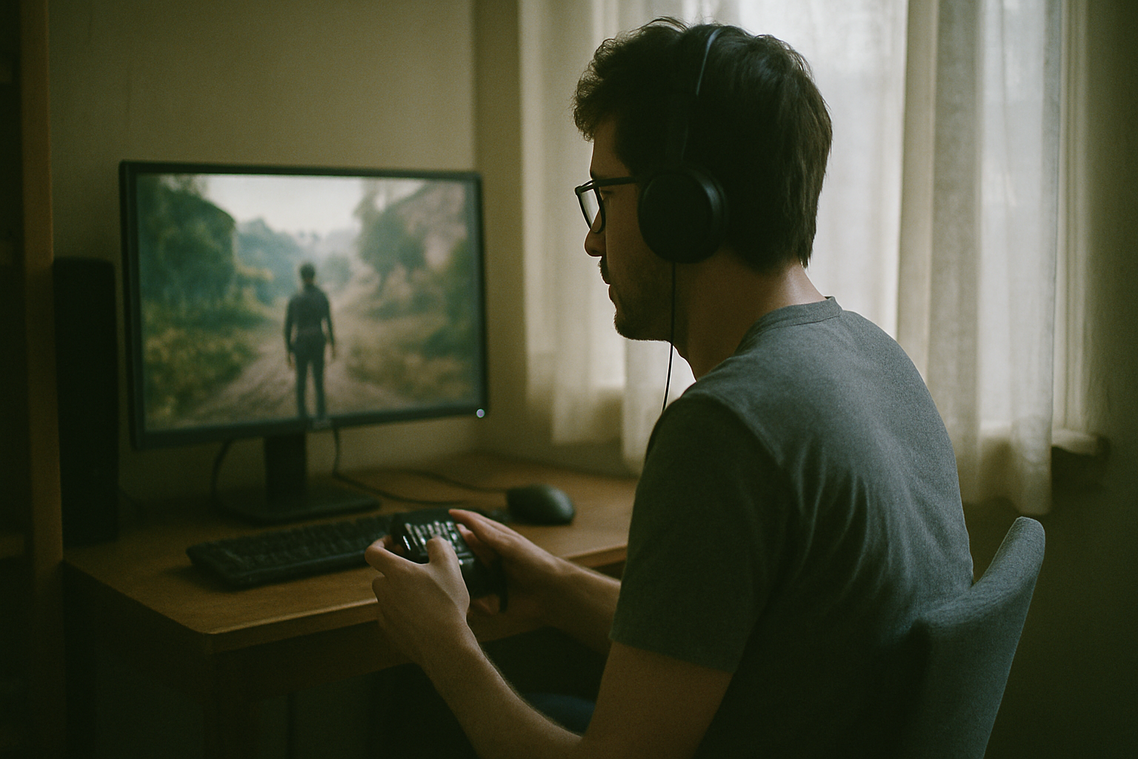
Every game asks a quiet question: are you here for the journey, or the destination?
For the casual player, motivation comes from curiosity, story, and exploration. Think of someone wandering through The Legend of Zelda, ignoring the main quest just to see what’s over the next hill (because sometimes the scenic route is the point). The goal is simple: experience the content. Low-stakes co-op nights with friends, experimenting with weird builds, chasing achievements for fun—these players treat games like interactive playgrounds.
By contrast, the competitive player is driven by measurable progress. They care about Skill Rating (SR) or Matchmaking Rating (MMR)—numerical systems that rank performance against others. Winning isn’t just fun; it’s validation. In play-centric genres like fighting games, MOBAs, and tactical shooters, the objective structure itself rewards mastery. Leaderboards exist for a reason.
Some argue you can’t mix both mindsets. I disagree. However, you should choose your primary focus. If you thrive on improvement, queue ranked and study your replays. If you value discovery, avoid toxic ranked grinds and embrace narrative-rich modes.
The amateur vs professional gamers divide often comes down to intention, not talent.
Pro tip: Track one metric—win rate, reaction time, or completion percentage—and improve it deliberately.
Ultimately, decide what success means to you. The game won’t choose. You will.
The Arsenal: Standard Equipment vs. Performance-Tuned Gear
First, let’s define latency—the delay between your input and the game’s response. Even a 20-millisecond gap can affect reaction time (NVIDIA, 2023). That’s the hidden divider in amateur vs professional gamers.
Casual players stick with standard controllers, basic headsets, and whatever screen is nearby. Comfort wins. And honestly, for couch co-op or late-night matches, that’s fine.
However, competitive players treat gear as performance insurance. High-refresh-rate monitors (144Hz or higher), mechanical keyboards with fast actuation, lightweight mice under 70g, and studio-grade headsets reduce input lag and sharpen awareness. Why leave precision to chance?
Critics argue skill matters more than hardware—and they’re right. But optimized gear removes variables (think of it as clearing lag like Neo dodging bullets).
Recommendation: If you compete seriously, upgrade your monitor first—frames win fights.
Finding Your Place in the Gaming World
You now have a clear framework for understanding the deep-seated differences in mindset, dedication, goals, and gear that separate casual and competitive players.
In my view, the real divide is purpose. Some chase joy, others chase trophies. That’s the heart of amateur vs professional gamers.
Both paths matter. Without laid-back explorers, worlds feel empty. Without grinders, esports loses its edge.
• Know why you log in.
• Choose communities that match your energy.
When you align with your motivation, games stop feeling frustrating and start feeling right. That’s where real fulfillment begins today.
Level Up From Here
You came here to sharpen your edge and understand what truly separates amateur vs professional gamers. Now you’ve seen how refined mechanics, smarter decision-making, disciplined practice, and strategic awareness create a measurable gap in performance.
The difference isn’t talent alone — it’s structure, repetition, and intentional improvement. Most players stay stuck because they grind without direction. That frustration of plateauing, missing key plays, or getting outmatched in critical moments? It doesn’t have to be permanent.
Start applying these play-centric systems immediately. Review your gameplay with purpose. Train specific mechanics daily. Study esports-level strategies instead of relying on instinct. Small, consistent upgrades compound fast.
If you’re serious about closing the gap between amateur vs professional gamers, don’t leave your growth to chance. Dive deeper into advanced breakdowns, proven skill hacks, and high-level strategy guides trusted by competitive players who want real results. Take control of your improvement now and start playing like the competition fears you.