
If you’re looking to improve your competitive edge, mastering self-review in esports may be the most overlooked skill separating casual competitors from consistent winners. Mechanical talent and game knowledge matter—but without structured reflection, progress stalls.
This article is designed for players who want measurable improvement. We break down how to analyze your gameplay effectively, identify recurring mistakes, refine decision-making under pressure, and turn raw match footage into actionable adjustments. Whether you compete in ranked ladders or organized tournaments, understanding how to evaluate your own performance is essential for climbing and staying competitive.
Our insights draw from professional match analysis frameworks, coaching methodologies used in top-tier esports environments, and performance psychology principles applied in high-level competition. Instead of vague advice, you’ll get clear, practical strategies you can apply immediately.
By the end, you’ll know exactly how to structure your review sessions, what to look for in your gameplay, and how to transform mistakes into consistent competitive growth.
You’ve hit it—that invisible ceiling where grinding more hours feels like running on a treadmill. The sweat is real, but the scenery never changes. Most competitors assume effort alone breaks plateaus; however, effort without direction is like swinging in the dark. The real issue isn’t passion. It’s process.
Instead, think of your gameplay like game film in traditional sports. Pros don’t just play; they dissect. Through self-review in esports, they turn messy matches into measurable data, isolating misplays, timing errors, and decision gaps.
This guide offers that framework—a microscope for your mechanics—so every session becomes targeted practice, not hopeful repetition.
Beyond Raw Skill: The Mental Framework for Self-Analysis
First, let’s address the obvious: reviewing gameplay while tilted is useless. When you’re frustrated, your brain looks for blame, not lessons. Emotional detachment means creating space between the match and your ego (yes, even after that “unlucky” loss). Research in sports psychology shows heightened emotion impairs objective decision-making (American Psychological Association). So pause. Walk away. Then review.
Next, set specific goals. Don’t just “watch a replay.” Instead:
- Identify one problem (e.g., “Why did I lose early duels?”)
- Track one phase (like mid-game rotations).
- Note one repeated mistake.
This turns self-review in esports into a targeted drill rather than passive watching.
Now, reframe mistakes as Productive Failure. Every death is data. Missed timing? That’s feedback. Lost objective? That’s positioning information.
Finally, separate your mistakes from your team’s. You can’t control teammates—but you can control positioning, cooldown usage, and communication timing. Focus there. That’s growth.
Your Digital Footprint: How to Collect Actionable Gameplay Data
If you’re serious about improving, data is your competitive advantage (yes, even more than raw aim). Most players rely on memory—unreliable at best, ego-protecting at worst. The pros rely on receipts.
VOD (Video on Demand) Review
VOD review means recording your own gameplay footage—screen, comms, everything. It’s the gold standard because it captures your exact perspective and decision-making process. You’ll spot hesitation on rotations, missed utility timing, or tunnel vision in clutch rounds. This is the backbone of self-review in esports. Pro tip: narrate your thinking live so you can compare intention vs. outcome later.
Leveraging In-Game Replay Systems
Built-in tools like CS:GO demos, LoL replays, or Valorant VODs let you watch from any player’s perspective. That flank you called “unlucky”? It was telegraphed 12 seconds earlier. Replays reveal map control gaps, vision errors, and positioning habits you literally couldn’t see in the moment.
Using Third-Party Stat Trackers
Sites like OP.GG or Tracker.gg surface patterns: low headshot percentage, poor economy management, weak KDA in late rounds. Stats don’t lie (though they do need context).
Building a ‘Mistake Library’
Create a simple spreadsheet logging recurring errors. Patterns = priorities. That’s how you turn gameplay into measurable growth.
The Autopsy: A Structured Method for Reviewing Your Own Gameplay
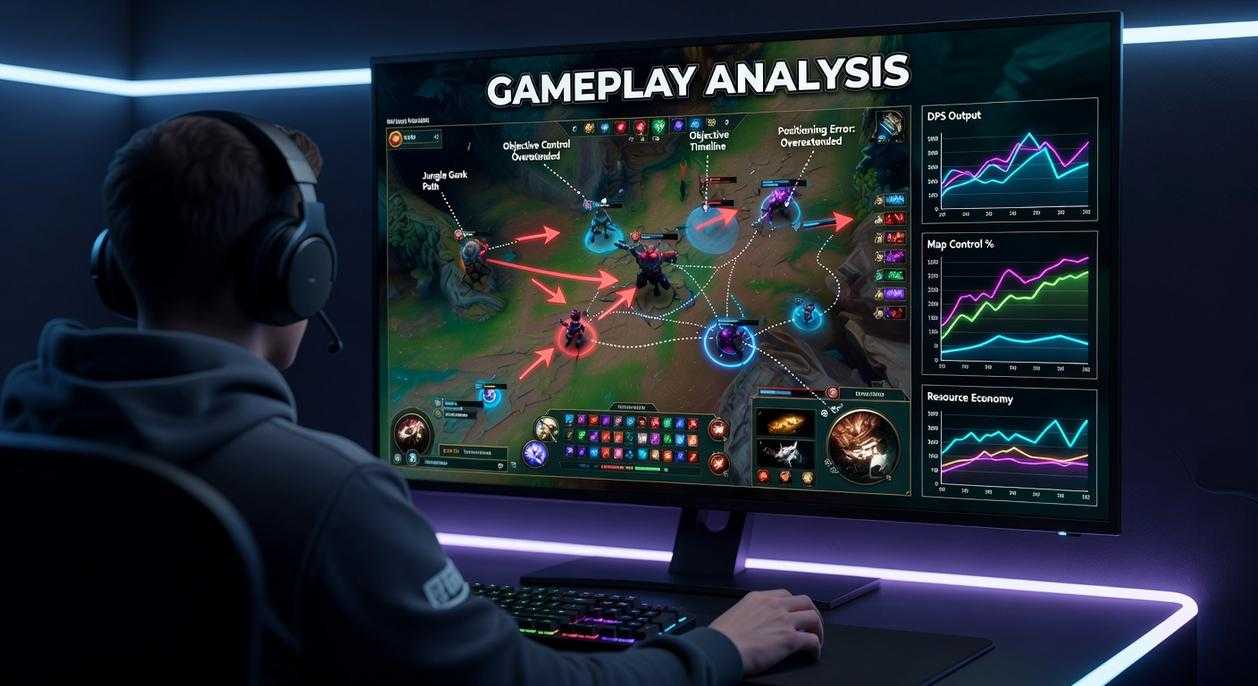
Most players rewatch their games the wrong way. They obsess over missed shots or flashy misplays and completely ignore the bigger picture. In my opinion, that’s like critiquing a movie by pausing on one bad line of dialogue (you’re missing the plot). If you actually want to improve, you need structure.
Phase 1 – The Macro View (2x Speed)
First, watch the entire match at double speed. No pausing. No rewinding. You’re not here to nitpick mechanics—you’re here to spot patterns. Look for failed rotations (team movement across the map to gain advantage), bad objective calls, wasted ultimates, or flawed win conditions.
Some argue this step is too shallow. “How can you learn without slowing it down?” Fair point. But I’ve found that zooming out first reveals strategic leaks you’d otherwise rationalize away. Patterns beat isolated mistakes every time.
Phase 2 – The Critical Moments (1x Speed)
Now slow it down. Pause at every death and every lost objective. Ask:
1) What was my goal?
2) Why did I fail?
3) What information did I lack or misread?
Be brutally honest. If your goal was unclear, that’s already the issue. This is where real self-review in esports happens.
Phase 3 – The “What If” Scenario
Finally, pause before key fights. Predict the optimal play before the outcome unfolds. Then compare it to what you actually did. This builds proactive decision-making instead of reactive panic.
And honestly, this mirrors the mental training routines behind championship performances. Structured reflection beats raw grind (every time).
From Data to Diagnosis: Pinpointing Your Core Weaknesses
You can’t fix what you won’t label. That’s where categorizing your mistakes turns chaos into clarity (and saves you from yelling “lag” every time you miss).
Start with Mechanical Errors—the execution layer of your play. These include inconsistent aim, sloppy movement, inefficient ability usage, or slow reaction time. Mechanical simply means the physical inputs between your brain and the keyboard. If your crosshair placement looks like it’s sightseeing, that’s mechanical. The fix? Targeted drills and repetition. Pro tip: short, focused practice beats marathon sessions that melt your brain.
Next are Decision-Making and Game Sense Errors. Game sense is your internal prediction engine—understanding positioning, timing, target priority, and win conditions. If you ult the tank while the healer waves at you untouched, that’s not mechanics—it’s judgment. Study pro VODs and pause to ask, “Why did they move there?” (Yes, this is basically detective work with better graphics.)
Finally, Mental Game Lapses. Autopilot, tilt, late-game focus drops, poor comms. Tilt means emotional frustration that sabotages performance—think Darth Vader after a bad scrim. These require mindfulness and pre-game routines.
Through consistent self-review in esports, patterns emerge. Some argue overanalyzing kills fun. Fair—but ignoring flaws doesn’t make them disappear. It just makes them repeat.
Start with an anecdote about grinding ranked for weeks without improvement. I did that once, convinced that sheer volume would push me over the hump. It didn’t. Simply playing more isn’t enough to break through competitive barriers. Instead, I committed to a tight loop: play, record, analyze, implement. That cycle—what I call self-review in esports—changed everything. However, insight means nothing without action. So isolate your single most frequent mistake. For your next five games, fix only that. This narrow focus builds durable habits and, over time, real progress. Track results, adjust deliberately, and repeat the process. Consistency beats raw talent.
Level Up With Smarter Competitive Play
You came here to sharpen your competitive edge and understand what truly separates average players from elite performers. Now you’ve seen how refined mechanics, smarter in-game decisions, adaptive strategies, and intentional self-review in esports create measurable improvement.
The biggest frustration in competitive gaming isn’t lack of effort — it’s grinding without progress. Repeating matches without analyzing mistakes. Practicing without structure. Watching better players without applying what they do differently. That cycle keeps skill ceilings low.
The solution is deliberate play. Study your mechanics. Break down your losses. Track your decision-making patterns. Focus on small, repeatable upgrades that compound over time. That’s how real advancement happens.
If you’re serious about climbing ranks, dominating your role, and playing with confidence under pressure, don’t leave your improvement to chance. Dive deeper into advanced strategy breakdowns, apply structured practice systems, and commit to consistent performance analysis.
Thousands of competitive players rely on proven play-centric insights to accelerate their growth. Start implementing what you’ve learned today — review your last match, identify three fixable mistakes, and correct them in your next session. Your next rank isn’t luck. It’s preparation.